
Refining Operator Confidence Through Iterative Mechanical Design
Hydraulic Controls | Product Refinement | OEM Collaboration
Customer
Aerial Equipment OEM
Application
Hydraulic control handle assembly for aerial equipment
Project Type
Modification to an existing production control
Primary Challenge
Reduce trigger free play while maintaining the existing control architecture and operator feel.
Final Solution
Spring-loaded trigger with optimized spring geometry and a balancing shim.
Project Status
Implemented into ongoing production.
The Starting Point: The original trigger, showing the free movement (take-up) before engagement that operators reported. This is the play the project set out to reduce.
01
The existing trigger assembly performed its intended function, but operator feedback identified excessive free play before initial engagement. Although this did not prevent the control from operating, the additional movement created ambiguity in the trigger feel and reduced operator confidence.
The challenge was therefore not to replace a failed design, but to refine an existing, functional control.
Any modification needed to work within the established handle architecture while maintaining appropriate trigger force, movement, mechanical compatibility, and manufacturability.
Engineering Challenge
Reduce trigger free play while preserving the existing control architecture and maintaining a natural, consistent trigger feel.
02
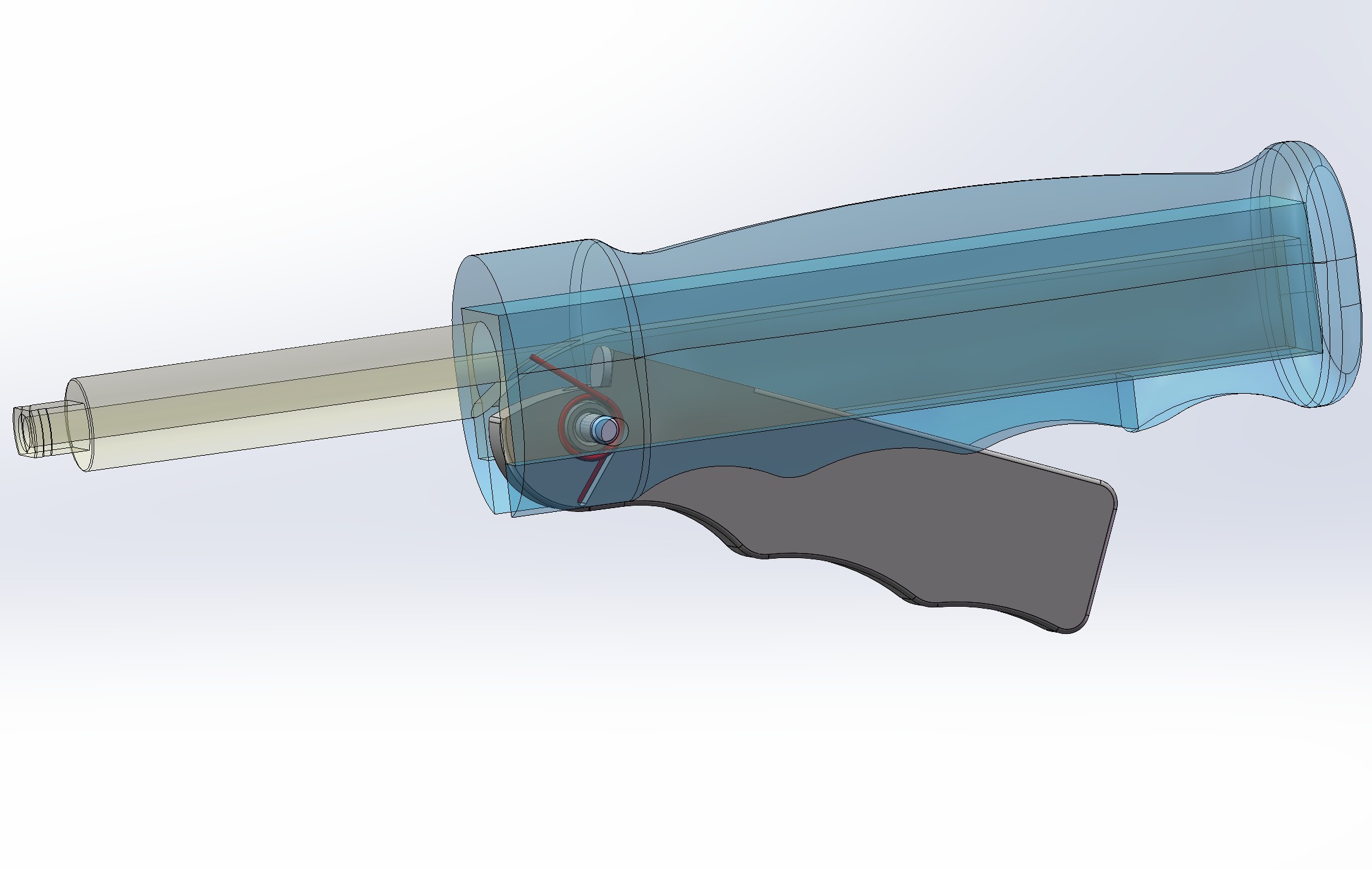
Aeriax began by examining the source of the free play and evaluating how changes to the trigger geometry might affect engagement.
Early investigation showed that geometry changes alone would not adequately address the issue. This shifted the engineering effort toward introducing controlled spring preload into the trigger mechanism.
Rather than treating the spring as an isolated component, the team evaluated how its force, position, angle, and interaction with surrounding components affected the complete assembly. The objective was to improve initial trigger engagement without introducing excessive activation force or compromising the existing control architecture.
Engineering Focus
03
The final configuration emerged through a series of physical design iterations rather than a single theoretical solution. Each prototype gave the team additional information about trigger feel, spring force, alignment, and component interaction, allowing the design to evolve around actual mechanical behavior.
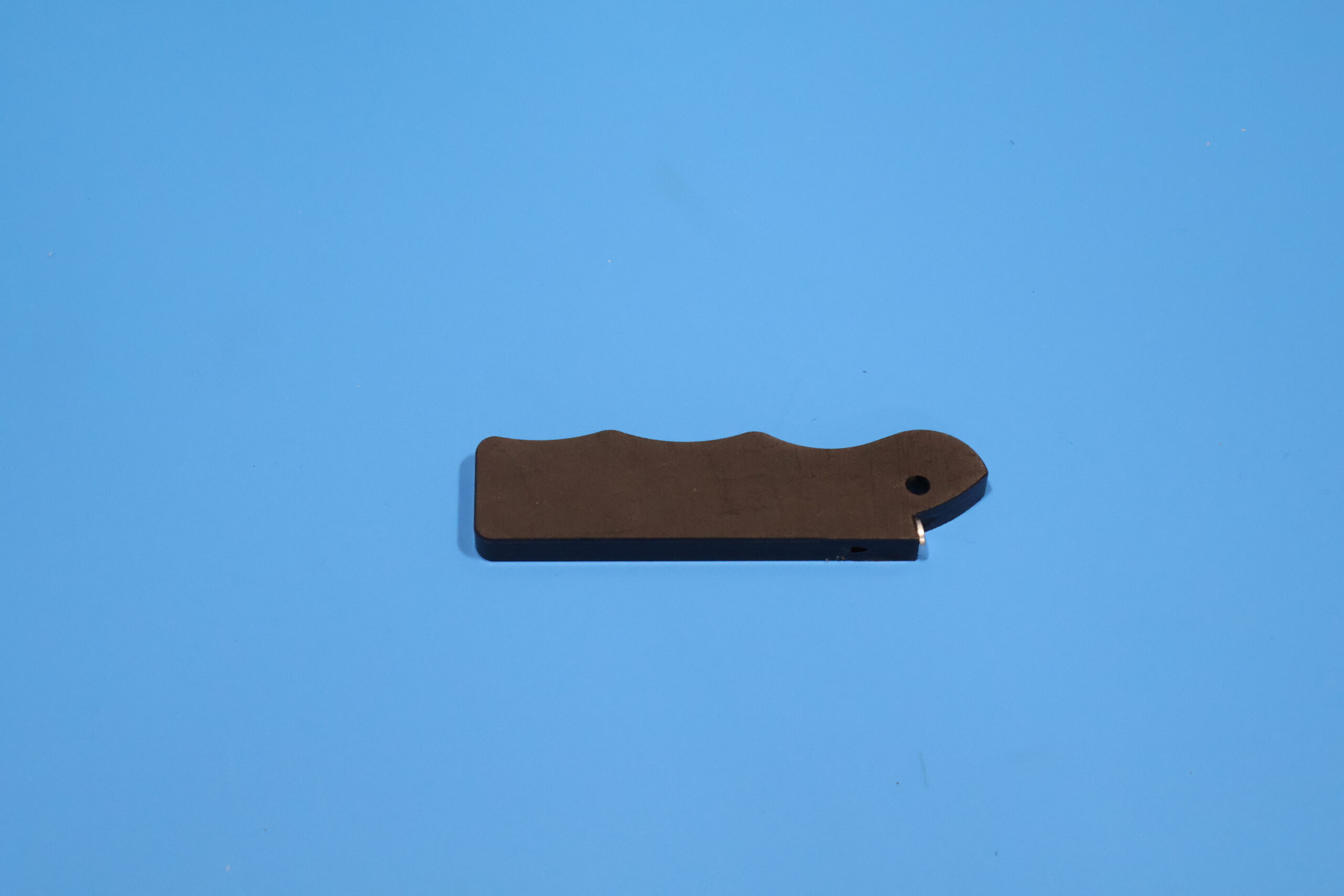
Version 1
Starting Point
The team first investigated whether modifications to trigger geometry could reduce the unwanted movement while preserving the existing assembly.
Testing and evaluation indicated that geometry changes alone would not provide the desired trigger feel, leading the team to explore a spring-loaded approach.
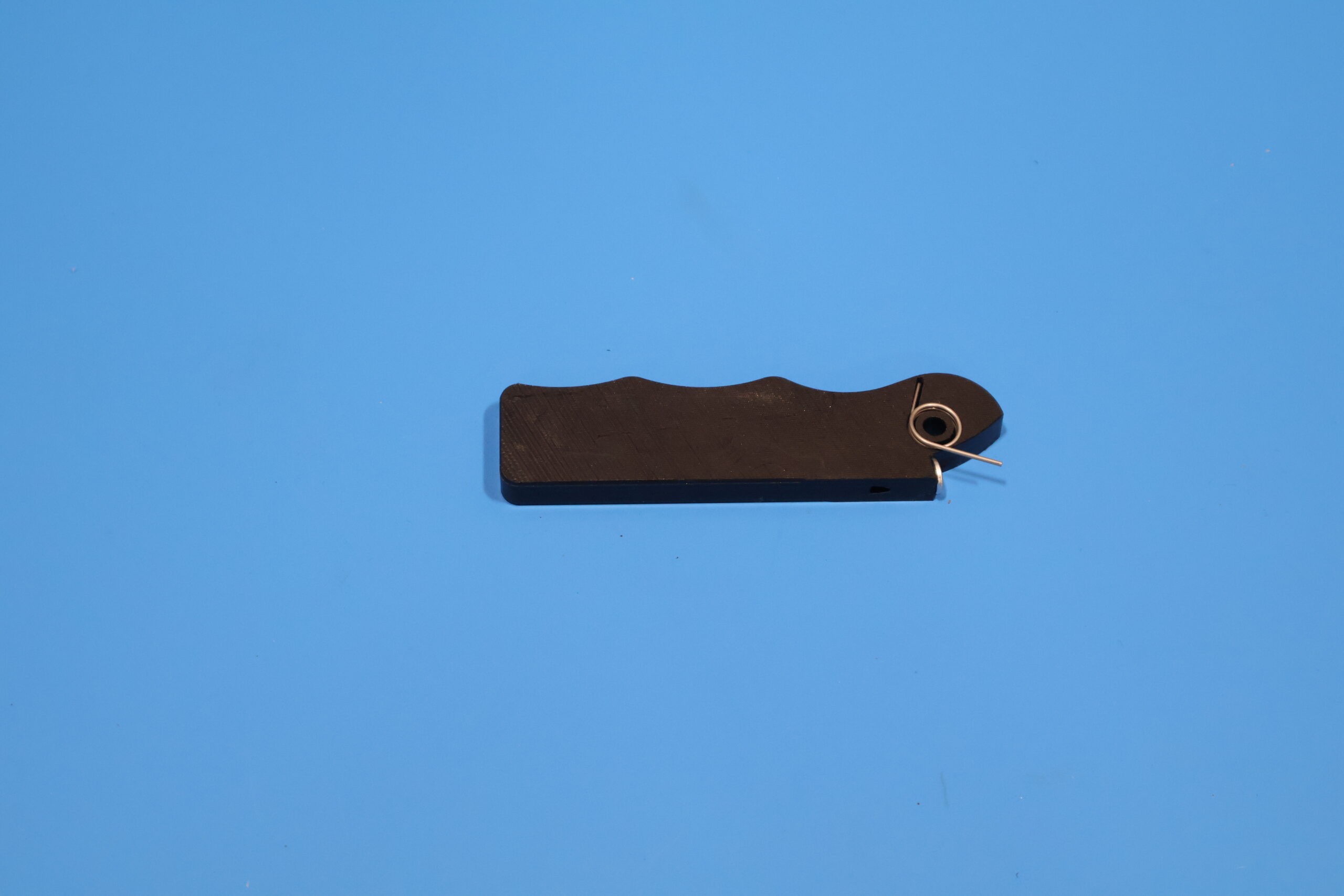
Version 2
Initial Concept
A spring was introduced to provide preload and reduce free movement before engagement.
The initial spring configuration produced more resistance than desired. Subsequent iterations adjusted the spring selection, position, and angle to achieve a better balance between positive engagement and comfortable activation force.
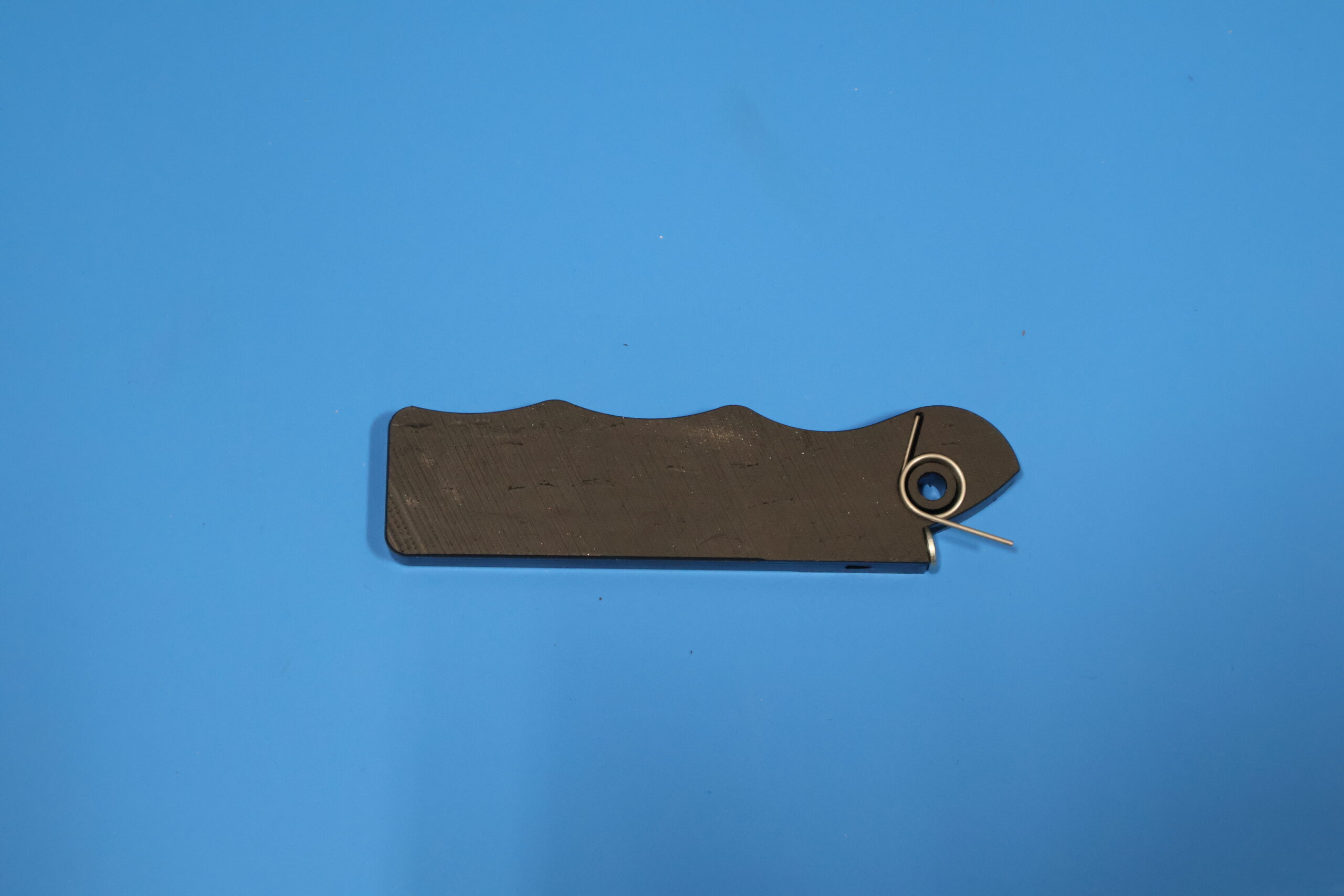
Final Design
Production Solution
As the spring-loaded configuration was refined, physical testing identified an additional interaction: the spring’s off-center loading could cause the trigger to rub against adjacent components.
A balancing shim was incorporated to improve alignment and produce smoother, more consistent trigger movement.
Prototype Testing: A spring-loaded prototype evaluated in the complete control assembly.
04
Aeriax assembled and physically tested complete control assemblies throughout the refinement process. This allowed the team to evaluate characteristics that are difficult to judge through geometry alone, including trigger feel, preload, activation force, alignment, and component interaction.
Physical validation revealed issues that informed subsequent design changes, including excessive spring stiffness and off-center loading that contributed to rubbing. Those observations were incorporated directly into the next design iterations.
Validation Activities
Key Learning
Physical testing exposed interactions that were not apparent from geometry alone.
Evaluating the trigger as part of the complete control assembly allowed Aeriax to refine spring force, positioning, and alignment based on actual mechanical behavior. The addition of the balancing shim is a good example of how a relatively small refinement emerged directly from hands-on validation.
05
The final design added a spring-loaded trigger to the existing control architecture. Controlled preload reduced free movement before engagement, refined spring geometry kept a natural trigger feel, and a balancing shim corrected the off-center loading found during testing.
The change was made without replacing the control assembly and was incorporated into ongoing production.
Key Design Improvements
Final Solution: The production configuration, with the take-up reduced and smooth, consistent trigger movement.
Solution Summary
Application
Hydraulic control handle assembly for aerial equipment
Production Status
Implemented in production
Customer
Aerial Equipment OEM
06
The final design addressed the OEM’s original concern without requiring a complete redesign of the existing control assembly. By reducing trigger free play and refining the mechanical feel of engagement, the updated configuration provided a more consistent operator experience while remaining compatible with the established control architecture.
Following development and validation, the refined spring-loaded configuration was incorporated into ongoing production.
Meaningful engineering improvements do not always require complete product redesigns.
In this project, operator feedback initiated a focused investigation into an existing control mechanism. Through collaborative problem definition, mechanical design, rapid physical iteration, and real-world validation, Aeriax translated a subjective concern about trigger feel into specific mechanical refinements that could be evaluated, adjusted, and ultimately implemented in production.
That progression, from feedback to investigation, prototype, validation, and refinement, is central to how Aeriax approaches application-specific control development.
Engineering disciplines demonstrated:
Mechanical Design | Hydraulic Controls | Operator Ergonomics | Rapid Prototyping | Design Validation | Manufacturing Optimization
Have an Engineering Challenge?
Whether you’re developing a new control system or refining an existing design, Aeriax works collaboratively with OEMs to engineer application-specific hydraulic control solutions.
